
Written by the certified driving instructors at Sky Driving School, Victoria BC. Last updated September 2026. For educational purposes only. Sky Driving School Ltd. does not warrant that use of this guide will result in obtaining a driver's licence.
How to Pass the ICBC Road Test in Victoria, BC
What the Examiner Is Looking For
When we are out on a lesson the first thing we tell students is that the examiner is not just checking if you can drive. They are checking if you are safe. We teach defensive driving based on Learn to Drive Smart and Tuning Up for Drivers because those are the exact standards the examiner uses. Over the years we have helped more than 2,500 drivers across Victoria, Saanich, Langford, Colwood, Oak Bay, View Royal and the Westshore get comfortable behind the wheel. If you are looking for driving lessons in Victoria BC, we are here to help.
Preparing for the ICBC road test in Victoria BC comes down to one thing: developing the ability to drive safely and consistently in real traffic. Based on official ICBC guidelines, your driving is assessed on how well you manage traffic situations safely and consistently. The examiner is looking at three things above everything else: your observations, your vehicle control, and your road positioning. ICBC recommends that drivers stay alert, anticipate potential hazards, and be prepared to stop at any time. If you are new to driving, our getting started guide covers everything before your first lesson. For drivers wanting to understand how to share the road safely with cyclists and pedestrians, our BC vulnerable road user rules guide covers the updated 2024 passing distances and defensive driving techniques.
Your driving is assessed on how well you manage these situations consistently throughout the test, not just some of the time.
- Look left, right, then left again before moving through any intersection. Do not just go on green.
- Checking rearview and both side mirrors before every movement
- Keep enough space in front of you. If the car ahead stops suddenly you need time to react.
- If it is raining or visibility is low, slow down. The posted limit is for ideal conditions only.
- Signal early and clearly before every turn or lane change. Let other drivers know what you are doing.
- Stay centred in your lane. Drifting toward the curb or centre line is a marked error.
- Turn your head for every shoulder check. If the examiner does not see your head move it does not count.
Table of Contents
Is Your Vehicle Ready for the Road Test
Many students do not realise the road test can end before it even begins. The examiner inspects your vehicle before getting in. If the vehicle fails the safety check the test does not happen and you will need to reschedule.
Make sure your vehicle has valid insurance and registration, working brake lights, headlights, turn signals and hazard lights, functional windshield wipers, no cracked windshield obstructing your view, tires in good condition, mirrors intact and properly adjustable, working seat belts for both driver and examiner, a working horn, and no dashboard warning lights on. The vehicle must also be clean enough for the examiner to sit comfortably. Use our vehicle checklist to go through everything before test day.
If you are renting the Sky Driving School vehicle for your road test, the vehicle check is already taken care of. You show up, we handle the rest. See our road test packages here.
Before You Begin Driving
A simple but effective strategy is how you position your vehicle before the test begins. If possible, park in a way that allows you to move forward when you begin driving rather than reversing out of a spot. This removes one stress point right at the start and means your very first move is clean and confident rather than backing up while the examiner is already watching.

Before moving do a full 360 degree scan. I call it the 360 check. Actually move your head and look all the way around the vehicle. You are looking for that cyclist coming up on your right, a pedestrian stepping off the curb, or a car you did not notice. If the examiner does not see your head move they will assume you did not check. This sets the tone for the whole test and shows you are already switched on.
Watch Our Video Guide

The road test begins the moment the examiner gets in the car and ends when you return to the ICBC office. Drive carefully throughout, from the first movement to the moment you park at the end. In the parking lot, maintain correct road positioning and always drive on the correct side.
Speed Control on the Road Test
Speed is the single most common reason students fail the ICBC road test in Victoria. And it cuts both ways. Going too slow is just as much of a problem as going too fast.
Too Slow for Conditions
Driving 35 or 40 in a 50 zone on a clear dry road with normal traffic is not defensive driving. The examiner sees it as lacking confidence and a failure to match the flow of traffic. You are expected to drive at a speed appropriate for the conditions, which on most Victoria residential streets in good weather means close to the posted limit.
Too Fast for Conditions
Going 56 km/h in a 50 km/h zone, or 36 km/h in a 30 km/h playground zone, means you will not pass. The examiner does not have much wiggle room here. If the sign says 30, do 30. We always suggest keeping your needle just a hair under the limit to stay safe. Match every speed zone. This includes 40 km/h zones which appear near some parks and community areas. Going 45 km/h in a 40 km/h zone or dropping to 33 km/h without a reason are both marked errors. Know the posted limit and drive to it.
Smooth Speed Management
Accelerating and decelerating roughly is also marked as an error. Smooth, gradual changes in speed show vehicle control. Avoid sudden braking unless the situation genuinely requires it. Build up speed gently and reduce it early and gradually.
Default Speed Limits in BC
Learn to Drive Smart is clear that speeding is risky but the safest speed is not always the slowest speed. If you drive much slower than surrounding traffic other drivers may get frustrated and try to pass you. Aim for a speed that is appropriate for the conditions. The posted speed is the maximum for ideal conditions only. Choose a slower speed if conditions are not ideal such as slippery roads or limited visibility.
Unless a sign tells you otherwise the default speed limits in BC are:
- 50 km/h within cities and towns
- 80 km/h outside cities and towns
- 20 km/h maximum in a lane or alleyway within municipalities unless otherwise posted
If there is no speed sign visible, the default within Victoria is 50 km/h. Do not assume a lower limit unless a sign says so. Driving 35 km/h on a clear 50 km/h street with no traffic is just as much of a problem as speeding.
School Zones and Playground Zones
These two zones are different and students confuse them constantly. Getting this wrong during the road test means you will not pass.

| Zone Type | Speed Limit | When It Applies | Days Active |
|---|---|---|---|
| School Zone | 30 km/h | 8am to 5pm on school days | School days only |
| Playground Zone Common Fail | 30 km/h | Dawn to dusk | Every day of the year including weekends, holidays and summer |
School Zones
A 30 km/h speed limit is in effect every school day between 8am and 5pm unless a different time is posted. If the sign says 30, you drive 30 regardless of whether you see children or not.
Playground Zones
A 30 km/h speed limit applies every single day from dawn to dusk, 365 days a year. It does not matter if it is a weekend, a holiday, or summer with school out. If you are in a playground zone during daylight hours you drive 30. Many students fail because they treat playground zones the same as school zones and assume the limit only applies on school days. It does not.
Going even slightly over 30 in a playground zone is a traffic violation and means you will not pass. Slow down before the sign, not after it.
As the zone ends begin accelerating back to the posted limit. Staying at 30 km/h on a 50 or 40 km/h street after the zone ends will earn you a demerit and will frustrate other road users around you.
After completing a roadside maneuver such as parallel parking, hill parking or a straight line backup inside a playground zone, the 30 km/h limit still applies when you pull away. Students are mentally focused on how the maneuver went and pull away at the full road speed without realising they are still in the zone. Before you pull away always check your surroundings and confirm what zone you are in. Do not let it catch you.
Shoulder Checks When and How
Missing a shoulder check is the second most common reason students fail in Victoria. The examiner marks every single movement. If you change lanes, turn, pull over, re-enter traffic or even open your car door without a shoulder check it goes on the sheet.

Using Your Mirrors Correctly
Your side and rear view mirrors let you know what is happening behind you. Adjust them before the test begins to get the best possible view. I see students get tunnel vision and only look straight ahead. Get into the habit of glancing at each mirror every five to eight seconds. It should become automatic.
Look in your rear view mirror before you slow down or stop. Will the cars behind you have space to stop? If not you may need to take action. Use your side view mirrors whenever you are planning to change your road position or direction. When pulling away from the right side of the road check your left mirror for cars coming from behind. When making a lane change to the right check your right mirror for enough space to move into.
Understanding Blind Spots
Even when your mirrors are properly adjusted there are large areas you cannot see. These are called blind spots. The most dangerous blind spots are to the sides of your vehicle. There are also blind spots below your field of vision to the front, rear and both sides. Each vehicle has smaller blind spots at the front and back as well as two large blind spots on the sides. Their size depends on the shape and size of the vehicle.
Some vehicles are equipped with blind spot detectors and backup cameras. While these can help detect hazards they do not replace the need to physically turn your head and do a shoulder check. The examiner is watching your head movement specifically. A proper shoulder check means physically turning your head to look into the blind spot, not a glance in the mirror. If your head does not turn, it does not count.
The standard we teach is at least 45 degrees over your shoulder in the direction you plan to move. If you are going to move to the right, check over your right shoulder. If you are going to move to the left, check over your left shoulder. This is the standard the examiner is measuring against.
Almost 60 per cent of all crashes in BC happen at intersections. Source: ICBC five year average. This is why observation at intersections is the single most important skill on the road test. See our full guide to driving through intersections safely.
When to Shoulder Check
- Before every lane change, both left and right
- Before turning right at an intersection, check for cyclists in the bike lane
- Before turning left at an intersection
- Before pulling over to the curb
- Before re-entering traffic from a stopped position
- Before opening your car door when parked. Many students do not know this one
- Before backing out of a parking space
Opening your door during the road test is not just about pulling the handle. Examiners watch for a full safety routine.
Exiting the Vehicle Safely
Before you reach for the handle, perform a full mirrors and shoulder check sequence. Check your rearview mirror first, then your left side mirror, then physically turn your head to check the blind spot over your left shoulder. Make sure no cyclists or cars are approaching from behind.
A technique we teach is to use your right hand to reach for the door handle. Reaching across your body naturally pulls your shoulders around and forces you to look behind you. It basically makes you do a shoulder check even if you are tired or nervous. Once you have confirmed it is clear, open the door and hold it firmly with your left hand. This gives you control against strong winds or passing traffic.
Many experienced drivers fail this because they open the door on autopilot without checking. The examiner is watching for the full sequence every time.
Distracted Driving Automatic Fail
If the examiner sees your phone during the road test you will not pass. Turn it off completely before you get in the car.
This includes reaching for your phone, glancing at it on the seat, trying to silence a call without looking at it, or having it visible anywhere within reach. Before you start your test turn your phone completely off or put it in your bag in the back seat. Do not leave it on the seat, in the cupholder or in your pocket where you might be tempted to silence a ring.
The same rule applies to any other distraction. Adjusting the radio, eating, or doing anything other than focusing on driving can be marked as inattentive driving.
Turn your phone off completely before you get in the car. Not silent. Off. Or put it in your bag in the back seat where you cannot reach it.
What Causes an Automatic Fail on the ICBC Road Test
Most errors on the ICBC road test are demerits that add up throughout the drive. But some mistakes will decide the outcome of your test regardless of how well you drove before that point. These are automatic fails. You will complete the drive and be informed of the result at the end of the road test.
Know these before you get in the car. Not one of them should be a surprise on test day.
- Using your phone. Any interaction with your phone during the road test means you will not pass. Reaching for it, glancing at it, or silencing a call. Turn it off before you start.
- Running a red light or stop sign. Failing to stop fully at a red light or stop sign means you will not pass.
- Failing to yield to a pedestrian. Pedestrians in crosswalks have the right of way. Not stopping for them means you will not pass.
- Speeding excessively. Going significantly over the posted limit, especially in a school zone or playground zone, means you have failed the road test.
- Causing a collision or near miss. Any at-fault contact or a situation where the examiner must intervene to prevent a crash means you will not pass.
- Dangerous action that requires examiner intervention. If the examiner has to grab the wheel, use the dual brake, or verbally redirect you from doing something unsafe, you will not pass.
- Not knowing how to operate your vehicle controls. If it starts raining and you cannot find the wipers, or your windshield fogs up and you cannot operate the defroster, you will need the examiner's help. Needing assistance with basic controls during the road test means you will not pass. Know your controls before you get in the car.
An automatic fail is different from accumulating demerits. You can make several minor errors and still pass. But any single automatic fail means you will not pass. Focus on eliminating these first before worrying about smaller mistakes.
Right Turns at Red Lights
Many students ask whether they should turn right at a red light. According to the BC Motor Vehicle Act Section 129, you may turn right on a red light after coming to a complete stop and yielding to other road users, when it is clear and safe to do so. However, you are not required to turn.

Intersections are where most mistakes happen on the road test. As you are coming up to a red light start scanning early. Look left and right before you even reach the stop line. You are looking for that driver who might run a yellow, or a pedestrian hidden behind a pillar. If your visibility is limited or the situation feels unclear, stay stopped. Do not let pressure from vehicles behind you rush your decision. Your safety matters more than being legally right.
Learn to Drive Smart recommends a specific scanning pattern as you approach any intersection. Look left, centre, right, then glance left again. If an oncoming vehicle is turning left take extra care as that driver may not see you. Always check crosswalks before crossing to make sure they are clear of pedestrians.
Stop Line Position
Where you stop matters. The nose of your car should be behind the stop line, not over it. Stopping too far back means you cannot see clearly. Stopping over the line is a violation. Find the position where your bumper is just behind the line and you can see the intersection clearly in both directions.
Managing Left Turns
Left turns require strong observation and timing. Many students fail because they either wait too long and miss a safe gap, or they commit too quickly without full observation. Our dedicated guide on left and right turns covers the full technique in detail.

When waiting in the intersection, focus on multiple elements at once. Watch oncoming traffic, traffic control devices and pedestrian activity in the crosswalk. Keep your wheels straight while waiting and maintain a safe position. Do not turn your wheels in anticipation of the turn because if you are hit from behind with turned wheels your car will be pushed into oncoming traffic.
As the situation develops, anticipate potential hazards. When oncoming traffic slows and a safe gap appears, proceed with caution and complete the turn. If the light changes while you are already in the intersection, you are expected to clear the intersection safely. This is why we always tell students to think two moves ahead and have an escape plan ready.
Stale Green Lights
A stale green light is one that has already been green for a while when you are approaching. It is about to change. The correct response is to slow down and be prepared to stop, not to accelerate through it. Many students fail for treating a stale green like a fresh green. If you cannot stop safely before the intersection and the light changes you may proceed but you must have already committed to the intersection. When in doubt, slow down.
↑ Back to contentsProper Use of Signals
Signals are how you communicate your intentions to other road users. ICBC recommends signaling early and clearly. Signal before your action, not during it. Allow enough time for other drivers to understand your intention without causing confusion.
The correct sequence before any movement is check your mirrors, signal your intention, perform a shoulder check, then proceed when it is clear and safe to do so. This applies to turns, lane changes, pulling over and re-entering traffic. Signaling too late, too early or forgetting to cancel your signal after a turn are all marked errors.
Lane Changes and Road Positioning
Lane changes require full awareness. Before changing lanes check your rearview mirror, check your side mirror, perform a shoulder check and signal early. Do not change lanes in intersections or where traffic control devices restrict movement. Maintain lane discipline and keep your vehicle centred in the lane. Drifting toward the curb or the centre line is marked as poor road positioning.
Create space as a safety buffer between you and other road users. The examiner wants to see that you are thinking about space management, not just reacting to what is immediately in front of you.
↑ Back to contentsHighway and Freeway Driving
Your Class 5 road test may include entering and exiting a highway or freeway. According to ICBC Learn to Drive Smart, the following skills apply when driving at highway speeds.
Entering a Highway or Freeway
The entrance consists of an entrance ramp, an acceleration lane and a merging area. While you are on the entrance ramp, scan highway traffic for a safe gap. Use the acceleration lane to match your speed to the speed of traffic on the highway while remaining within the speed limit. Do not stop in the acceleration lane. Stopping there puts you at risk of being rear ended by traffic coming up behind you.
Once you reach the merging area, signal your intention, perform a shoulder check over your left shoulder, and move into traffic when there is a safe gap. Do not force another driver to adjust their speed for you. Be aware that cycling is permitted on some highways and freeways so check before you merge. We cover this in depth in our multi lane and highway driving lesson.
Lane Discipline at Higher Speeds
Keep right except to pass. On a multi lane highway or freeway, the left lane is for passing and overtaking, not for cruising. If you are not passing another vehicle, stay in the right lane. Increase your following distance to at least three seconds on highway or freeway driving. In bad weather or on slippery roads increase that to four seconds. Check your mirrors more frequently than you would in the city because traffic situations develop faster.
Freeway Courtesy
When you are driving in the right lane and another vehicle is merging from an entrance lane, help them merge safely. Pull over into the left lane if it is safe to do so, or adjust your speed to create a large enough gap for them to move in safely.
Exiting a Highway or Freeway
Before your drive, check which exit you need so you can move to the right lane in plenty of time. Signal your intention to exit, maintaining your speed until you enter the exit lane. Then slow down gradually as you prepare for roads with lower speed limits. Do not brake on the highway itself. Wait until you are in the exit lane before reducing your speed.
If you are directed onto a highway or freeway stay calm and focus on the sequence. Scan for a safe gap on the entrance ramp, use the acceleration lane to match traffic speed, signal, shoulder check, and merge when it is clear and safe to do so. The examiner is watching your process.
Pulling Over and Re-entering Traffic
When asked to pull over, many drivers react too quickly and pull over at the nearest spot without checking if it is safe or legal. Defensive driving means planning your movement. Start by checking traffic approaching from behind. Signal early and begin slowing down gradually.
Choose a safe and legal location away from driveways, intersections, fire hydrants, yellow curbs and traffic control restrictions. Position yourself for safety and stop smoothly. When re-entering traffic scan left to right, check mirrors and blind spots, yield to through traffic and enter when there is a safe gap.

Following Distance and Space Management
Maintain a safe following distance of at least two to three seconds under normal conditions. Increase that distance when visibility is reduced or traffic situations become more complex. When stopping behind another vehicle, leave enough space to see the rear tires of the vehicle ahead touching the road. This gives you an escape plan if needed and shows the examiner you are thinking about space.
↑ Back to contentsEmergency Vehicles

When you see or hear an emergency vehicle with lights and sirens active you must pull to the right and stop when safe to do so. Use your signal to let the emergency vehicle driver know you have seen them and are pulling over. Under the BC Motor Vehicle Act Section 177, when passing a stopped emergency vehicle on a road with a speed limit under 80 km/h you must slow to 40 km/h. On roads 80 km/h or above you must slow to 70 km/h. You must also move over to the next lane if it is safe to do so.
Do not follow a fire truck within 150 metres. Do not stop in an intersection when pulling over for an emergency vehicle. Think ahead and pull over before or after the intersection. Do not drive over a fire hose. If you are at a green light and an emergency vehicle is approaching, wait until it has passed before proceeding even if the light is green in your favour.
Once an emergency vehicle has passed, stay alert. There may be more than one. Listen for additional sirens before pulling back into traffic.
This rule also applies to all stopped vehicles displaying flashing lights on the side of the road including tow trucks, garbage trucks, utility workers, highway maintenance workers and conservation officers. You must slow to 40 km/h when the speed limit is under 80 km/h, or 70 km/h when the speed limit is 80 km/h or above. Many students only know this rule for police and ambulance but it applies to all flashing light vehicles.
If an emergency vehicle appears during your test stay calm, signal, move right and stop smoothly. The examiner is watching how you respond, not trying to trick you.
Cyclists and Vulnerable Road Users
Cyclists are considered vulnerable road users under BC law. Before turning right or changing lanes, always perform a shoulder check specifically to identify cyclists in bike lanes or beside your vehicle. Do not enter or stop in a bike lane unless permitted by traffic control devices. Stay alert when other road users are present and anticipate their movement. The stop line image from our earlier section shows exactly how to position relative to a bike lane at an intersection.
↑ Back to contentsConstruction Zones
Construction zones have specific speed limits posted and those limits apply whether workers are present or not. Signs, pylons, barriers and construction vehicles all signal that you need to slow down and proceed with caution. ICBC's Learn to Drive Smart guide covers construction zone driving specifically and the examiner will mark you if you do not adjust your speed at the posted signs.
When a flagger is present treat them exactly as you would a traffic control device. A stop paddle means come to a complete stop. A slow paddle means reduce speed and proceed with caution when directed. Do not second guess a flagger.
Increase your following distance in construction zones because road surfaces can be uneven and stopping distances are longer. Stay alert for workers, equipment and sudden lane shifts.
Parking Skills and Backing Up
You are expected to demonstrate control in parking situations including parallel parking, back stall parking and parking on either side of the road. Move slowly and maintain full observation. Use mirrors, shoulder checks and proper steering control. Position yourself for safety and adjust as needed.
Watch Our Parallel Parking Guide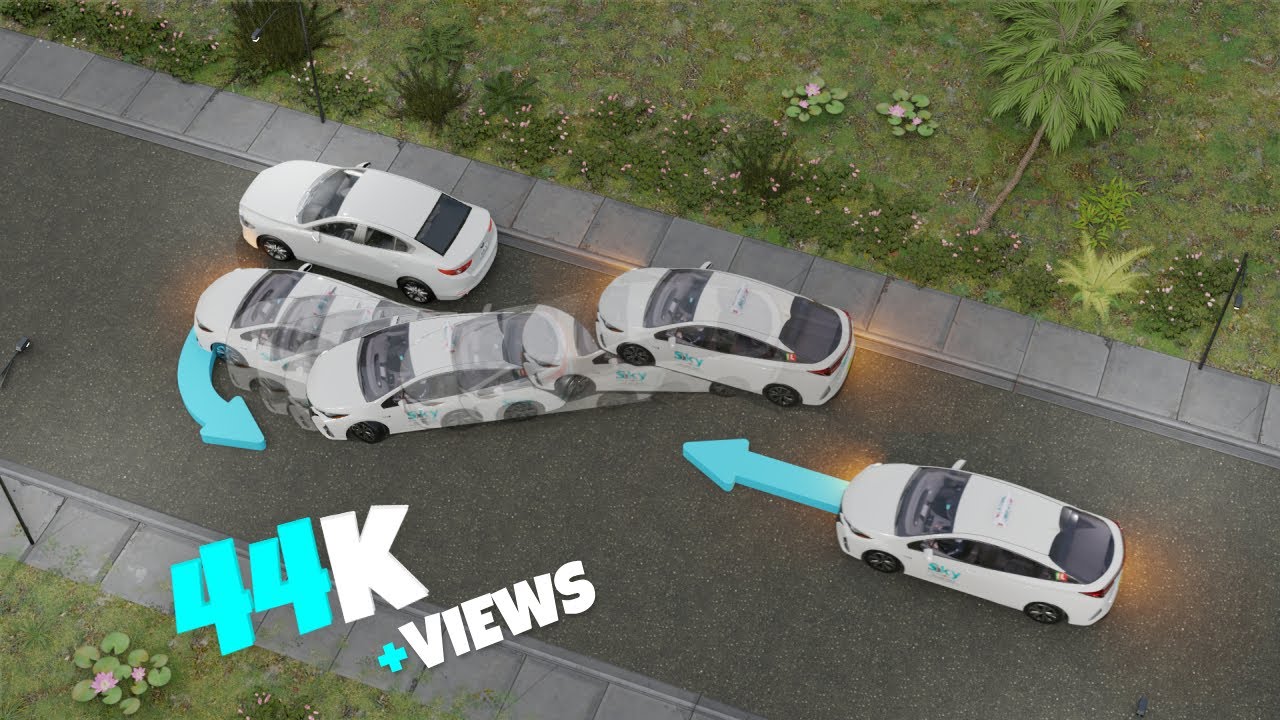
Practise With Our Free Parallel Parking Simulator
Our parallel parking simulator lets you practise the same four step method we teach in lessons. Watch the full sequence in Demo mode, then test yourself in Quiz mode over three rounds, with each question read aloud.
Driving a different car? Our parallel parking steering wheel calculator shows how far to turn the wheel. The Toyota Prius Prime is available now, with more vehicles being added.
Parallel Parking Simulator
Hill Parking
Hill parking is tested during the road test. The rule is straightforward. When facing downhill, turn your wheels toward the curb and engage the parking brake. When facing uphill with a curb, turn your wheels away from the curb and engage the parking brake. When facing uphill with no curb, turn your wheels toward the edge of the road.

Backing Up Safely
Backing up requires full awareness. Before moving perform a 360 degree scan, identify any approaching vehicles or pedestrians, and check all mirrors and blind spots. While backing, move slowly, keep the vehicle straight and continue scanning. Occasionally check the front of the vehicle to maintain proper positioning. Keep observing the whole time you are reversing, not just at the start.
Learn to Drive Smart recommends giving a quick warning tap on your horn before backing up if visibility is limited. Be especially careful when backing out of a driveway as it is easy to miss seeing children, pets, pedestrians, cyclists and people in wheelchairs. If you have been stopped for some time walk around the back of your vehicle to check that your path is clear. Better yet, try to back into driveways and parking spots so you can drive out facing forward.
Three Point Turns and Two Point Turns
Watch Our Three Point Turn Guide

The examiner may ask you to perform a three point turn or a two point turn. Both require full observation before and during the maneuver, slow controlled movement and proper steering. Scan for traffic in all directions before starting and pause to check before each direction change. Our advanced maneuvering lesson covers both in a dedicated session.
Backup Camera
Backup cameras are helpful tools. However, ICBC recommends that drivers do not rely on them alone. You must continue to check mirrors and physically look around the vehicle. Using only the backup camera without performing proper visual checks will be marked as insufficient observation.
↑ Back to contentsSteering and Hand Position
Keep both hands on the outside of the steering wheel. If you drive with your hands inside the wheel your hands could be injured if the airbag deploys. You may sometimes need to steer with one hand when using a dashboard control but return to two hands as soon as possible. Two hands give you better control and shorten your response time when a hazard appears.
According to Learn to Drive Smart, place your hands at an equal height at the 9 o'clock and 3 o'clock position, or the 10 o'clock and 2 o'clock position, whichever is most comfortable. If your vehicle has an airbag in the steering wheel, the 9 and 3 or even 8 and 4 position is safer than 10 and 2. At 10 and 2 your hands could strike your face if the airbag deploys.
The examiner watches your hand position throughout the test. Driving with one hand on the wheel casually, or with a hand inside the wheel, will be marked. Keep both hands on the outside at all times unless you have a genuine reason to briefly use one hand.
Pre-Trip Vehicle Knowledge
Before you put the car in gear the examiner will ask you to show them a few basics. I always tell students to take a breath here because it is the easiest part of the test. They just want to see that you know where everything is. Not knowing how to turn on your wipers when it starts raining is an automatic fail so know your controls before you leave home. Review our car controls guide and pre-trip checks before test day.
- Hazard lights
- Headlights and high beams
- Turn signals
- Windshield wipers at different speeds
- Defroster front and rear
- Horn
- Parking brake
Your mirrors should already be properly adjusted before the examiner gets in. Being prepared allows you to focus on driving instead of searching for controls during the test.
Staying Calm on Test Day
Many students perform well in lessons and struggle on test day not because their driving changed but because their mindset did. The examiner sitting beside you is not there to trick you. They are watching whether you can drive safely and consistently. Building your core driving skills to the point where they are automatic is what removes the pressure.
If the examiner gives an instruction late or unclear, do not panic. Slow down, take the next safe opportunity and proceed calmly. If you miss a turn it is not automatically a fail. How you recover matters. Stay focused on what is ahead not on what just happened.
If you feel the examiner is being rude or making you uncomfortable, acknowledge it internally and keep driving. Do not engage with it during the test. Your job is to drive well. Everything else can be dealt with after.
Talk through your checks out loud if it helps you stay focused. Some students find that quietly saying "mirror, signal, shoulder check" before each movement keeps them from missing steps under pressure. If you want to experience what the test feels like before the real thing, our road test evaluation is the closest thing to the real test you can get.
Your Test Day Checklist
Most students focus all their preparation on driving technique and forget the basics that happen before the test even starts. Use this checklist the night before and the morning of your test.
The Night Before
- Review your weak areas. Do not cram new material. Focus on the one or two things your instructor flagged most recently.
- Confirm your booking. Double check your ICBC appointment time, location, and which licence office you are going to.
- Prepare your documents. Lay out your learner's licence and any required paperwork so you are not searching for them in the morning.
- Check the vehicle. If you are using your own car, walk around it. Check that lights, wipers, and signals work. Make sure the registration and insurance are in the glove box.
- Get a proper sleep. Fatigue slows your reaction time and makes shoulder checks sloppy. A tired driver misses things. Get to bed early.
- Turn off your phone notifications. Set it to do not disturb overnight so you are not woken up by messages.
Morning of the Test
- Arrive at least 15 minutes early. Rushing to the ICBC office raises your stress level before you even sit down. Give yourself time to park, breathe, and settle.
- Adjust your mirrors before the examiner gets in. Do it in the parking lot. You want your full attention on the road once the test begins, not on mirror positioning.
- Turn your phone completely off. Not silent. Not do not disturb. Off. Put it in your bag in the back seat.
At the ICBC Lot
- Park so you can pull forward. If possible, choose a spot that lets you drive out forward rather than reversing to start. One less stress point right at the beginning.
- Do your 360 check before moving. The test starts the moment you leave your driveway. Drive to the office the same way you will drive during the test.
- Take a breath before the examiner gets in. You have prepared for this. Just drive the way you always drive.
If you book your road test in our vehicle, we pick you up, drive you to the ICBC office, and the vehicle is already checked and ready. You just focus on driving. See our road test packages here.
Why Choose Sky Driving School
Sky Driving School focuses on long term driving skills, not short term results. Students preparing for the ICBC road test in Victoria BC come to us because we do not just teach you how to pass a test. We teach you how to drive safely in real Victoria traffic so that passing the test becomes the natural outcome of being a good driver.
- Over 2,500+ students trained across Greater Victoria
- 500 verified Google reviews
- Certified driving instructors led by our senior instructor
- Licensed Driving School
- Serving Victoria, Saanich, Langford, Colwood, Oak Bay, View Royal and the Westshore
We provide driving lessons in Victoria BC across the region and our goal is to help you handle any traffic situation with confidence. We also offer a road test evaluation that gives you real feedback on exactly where you stand before test day. Watch our expert driving tips and videos or view our lesson packages and pricing here.
Hazard Perception What to Look For
Hazard perception is one of the most important skills assessed during the ICBC road test. A hazard is anything in the driving environment that could harm you or other road users. The examiner may ask you about hazards while you are parked or while you are driving. Either way your answer needs to be ready and your driving must not suffer because of it. You can also sharpen your hazard awareness with our practice knowledge test. Not yet licensed? As of June 2026 you can take the ICBC knowledge test online from home.
See. Think. Do.
Learn to Drive Smart teaches a simple two step process for every driving decision. Every time you see a hazard you need to think about what it means and then do something about it before it becomes a problem.
- See. Use your eyes to gather information ahead, to the sides and in your mirrors constantly. Spot the hazard early.
- Think. What could happen? Will the cyclist swerve? Will the car door open? Will the pedestrian step out? Process the risk before it develops.
- Do. Take action. Ease off the accelerator, cover the brake, adjust your position, slow down, signal, or stop. Act before you have to react.
This is exactly what the examiner is watching throughout your test. They are not just watching whether you stop at stop signs. They are watching whether you are reading the road ahead and making decisions before situations force your hand.
Here is a real scenario from Learn to Drive Smart. You are driving in the rain. Just ahead there is a cyclist. Further on a bus has stopped to let passengers out. Just behind you a driver is following too closely. Suddenly the door of a parked car swings open right in front of the cyclist. Will the cyclist swerve or fall? You take your foot off the accelerator to slow down and get ready to brake. That is hazard perception in action. Identifying the danger before it becomes an emergency.
If the examiner asks you about hazards while driving do not slow down significantly to answer. Keep your speed consistent and answer calmly. Dropping your speed noticeably while answering is itself a demerit. It shows you cannot manage multiple tasks at once. Practice answering hazard questions out loud while driving so it becomes natural.
The Six Things to Always Look For
When the examiner asks what hazards you can identify, aim to name at least six. Train yourself to scan for these every time you drive:
- Limited visibility such as hills, bends, tall hedges, buildings blocking your sightlines
- Pedestrians, especially near crosswalks, schools, bus stops and parked cars
- Cyclists in bike lanes, on the road, passing parked cars where a door could open
- Animals such as dogs, deer, birds that could enter the road suddenly
- Sun glare, low sun blinding you or other drivers, particularly at dawn and dusk
- Rain and wet roads, reduced visibility, longer stopping distances, slippery surfaces
- Hidden driveways with vehicles pulling out without warning, especially on residential streets
- Parked cars where doors swinging open, drivers pulling out, pedestrians stepping from between them
- Oncoming vehicles, especially those drifting, turning left or driving too fast
- Tailgaters, drivers following too close behind you, affecting your ability to brake safely
- Bus stops where passengers stepping into the road after exiting, buses pulling back into traffic
- Construction zones with workers, equipment, uneven road surfaces, sudden lane changes
As you drive always think about where hazards could occur, not just where they are right now. A parked car is not a hazard on its own. But a parked car with someone sitting in it, near a busy street, next to a cyclist, is a high risk situation. Train your eyes to read the whole picture.
Rebooking After a Failed Road Test
Failing the ICBC road test is more common than most students expect. Many excellent drivers fail on their first attempt, usually because of nerves rather than a lack of skill. What matters is what you do next.
How Long Do You Have to Wait
ICBC requires a mandatory waiting period before you can rebook, and the wait gets longer with each attempt. This time is built in for you to practice and address the specific areas where you were marked.
- After your first fail: wait at least 14 days before rebooking
- After your second fail: wait at least 30 days before rebooking
- After your third fail and beyond: wait at least 60 days before rebooking
ICBC road test appointments book up quickly in Victoria. Even if your mandatory wait is only 14 days, available slots may be several weeks out. Book your next appointment as soon as the waiting period allows. Our guide on how to get your Victoria road test sooner explains exactly how to find earlier slots.
How to Use the Time Effectively
The examiner gives you a result sheet after every road test explaining what went wrong during the road test. That sheet is your study guide. Book a lesson with your instructor, bring the sheet, and spend the session specifically on those areas. One focused lesson on your weak points is worth more than ten general practice drives.
A road test evaluation with Sky Driving School puts you in real test conditions with instructor feedback. It is the most direct way to find out what still needs work before you go back.
Do not rebook until you are genuinely ready. The wait times get longer with each fail. One extra week of solid practice before rebooking is almost always worth it.
Frequently Asked Questions
Common questions about the ICBC road test in Victoria BC answered by our certified driving instructors.
What is the most common reason people fail the ICBC road test?
Speed control, missing shoulder checks, and rolling stops at stop signs are among the most common reasons drivers fail the ICBC road test in Victoria BC. Examiners closely watch observation skills, lane positioning, and whether drivers adjust their speed properly for road conditions.
Do I have to turn right on a red light?
So many students ask us this. While you are allowed to turn right on red in BC after a complete stop and yielding to all other road users, it is completely optional. If there is no sign prohibiting it you may turn when it is clear and safe. But ICBC examiners will not deduct points for waiting behind the stop line until the light turns green. If waiting feels safer, wait. Just make sure to stay behind the white line so you do not interfere with traffic. Note that some intersections have a No Turn on Red sign and if that sign is posted you must wait for the green light regardless.
What is the speed limit in a playground zone?
30 km/h from dawn to dusk, every day of the year. This includes weekends, holidays and summer. It does not only apply on school days.
Can I use a backup camera during the road test?
Yes, but you must continue to observe your surroundings using mirrors and direct checks. Relying on the backup camera alone without physical checks will be marked as poor observation.
What if I do not understand the examiner's instructions?
Slow down and ask them to repeat the instruction. It is always safer to ask than to guess and make a wrong turn or miss a maneuver. The examiner would rather repeat themselves than have you do something unsafe.
How should I handle pressure from other drivers during the test?
Stay focused on your own driving. Expect other drivers to make mistakes and do not react to pressure from vehicles behind you. Your safety is more important than what other drivers think of your pace.
What is the most important skill on the road test?
Observation and decision making in traffic situations. The examiner wants to see that you are constantly aware of what is around you and making safe, confident decisions based on that awareness.
What happens if my phone rings during the road test?
Do not touch it. Do not look at it. Do not try to silence it. Any interaction with your phone during the road test means you will not pass. Turn it off completely before you get in the car.
Can I drive below the speed limit to be safe?
Only if conditions require it, such as bad weather, reduced visibility or heavy traffic. On a clear dry road in normal conditions, driving significantly below the speed limit will be marked as driving too slow for conditions, which is a fail reason.
How long do I have to wait to rebook after failing the ICBC road test?
ICBC requires a mandatory waiting period that increases with each failed attempt. After your first fail you must wait at least 14 days. After your second fail the wait is 30 days. After your third fail and any subsequent fails the wait is 60 days. Keep in mind that available appointments in Victoria often book several weeks out beyond those minimums, so rebook as early as the waiting period allows.
What should I do if I fail the ICBC road test?
Read your result sheet carefully. The examiner explains what went wrong during the road test. Book a lesson focused specifically on those areas rather than general practice. A road test evaluation with an instructor replicates real test conditions and gives you targeted feedback on whether you are ready to rebook.
How can I improve my chances of passing the ICBC road test on the first try?
The drivers who pass on their first try in Victoria BC are the ones who have made safe habits automatic before test day. Book enough lessons to cover all the tested skills, practice in real Victoria traffic, and take a road test evaluation before your actual test so you know exactly where you stand. On test day focus on observation, smooth speed control, and shoulder checks on every movement.
Ready to Book Your Lesson?
Professional guidance from a certified driving instructor. We are here to help you build the skills and confidence you need for test day.
Book a Lesson View PricesSky Driving School Ltd. · 2210 Quadra St #3, Victoria, BC · 250-986-0003
Page Updates
September 2026: Added the free parallel parking simulator and steering wheel calculator to the parking skills section.
June 2026 — Added link to ICBC knowledge test online guide. Fixed CTA section styling.
May 2026 — Added highway and freeway driving section, test day checklist, automatic fail consolidated section, rebooking wait times, school zone vs playground zone comparison table, table of contents, and additional FAQ entries. Updated ICBC terminology throughout.
April 2026 — Original publication.
Questions and Comments
Have a question or tip about the ICBC road test in Victoria? Leave a comment below and help other drivers prepare.
Leave a Comment
